The Alphian Approach

Security Requires Strategy.

Camera installation is not simply about running a wire and driving a screw into drywall. It is a highly technical discipline. A poorly placed camera facing a bright window will render faces completely black. A standard wide-angle camera aimed at a parking lot will record a car, but it will never be able to read the license plate.

Before we touch a single tool, our engineers conduct a comprehensive facility audit. We calculate exact fields of view, identify blind spots, and select specific camera models engineered for your unique environmental challenges.

Crucial Deployment Factors:
  • Glare Management: Utilizing True WDR (Wide Dynamic Range) to capture clear faces even against bright glass storefronts.
  • LPR vs. Standard Video: Using specialized high-speed shutters and headlight-blocking software to read license plates.
  • Weatherproofing: Specifying IP67-rated seals and IK10 vandal-proof domes for exterior placements.
Security Camera Floorplan Blueprint

Pre-Construction Warning

For new builds, engage us during framing to hide all data lines before drywall goes up.

Not All Cameras Are Created Equal

The market is flooded with consumer-grade gadgets. Here is a breakdown of connectivity types and why commercial facilities only rely on one.

PoE (Power over Ethernet)

The Commercial Standard

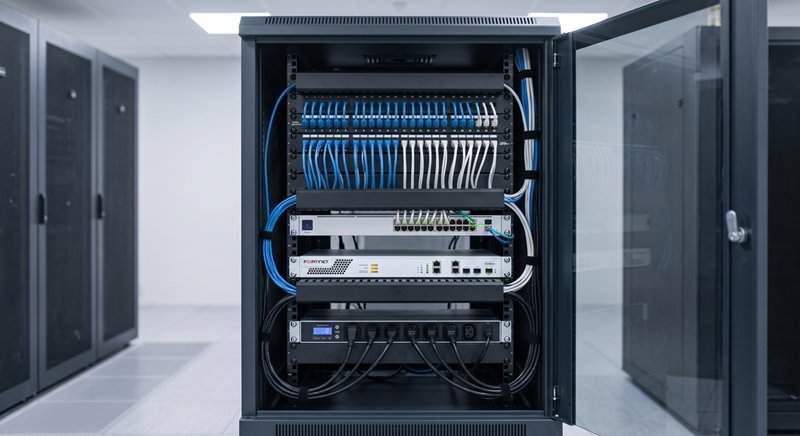
A single Cat6 cable provides both high-speed data and electrical power to the camera. It never drops signal, cannot be jammed by Wi-Fi disruptors, and is backed up by your IT room's battery supply during a power outage. This is the only standard Alphian deploys.

Wireless & Outlet-Powered

High Failure Rate

"Wireless" cameras still need to be plugged into a standard wall outlet for power, making them incredibly easy to unplug. They rely on Wi-Fi for data, meaning interference from concrete walls or heavy network traffic will constantly cause dropped frames and missing footage.

Battery & Solar-Powered

Situational Use Only

These cameras sleep to conserve battery and only wake up when they detect motion. By the time they wake up, the suspect is often out of frame. They are acceptable for remote farm gates without power, but entirely unsuited for businesses requiring 24/7 continuous recording.

Analog (Coaxial)

Legacy Technology

Older systems running on thick coaxial cables. They lack the bandwidth for modern AI analytics and true 4K resolution. If you have legacy coax in your walls, we can often use specialized encoders to upgrade you to IP cameras without ripping open your ceilings.

Educate Yourself

Demystifying the Datasheet.

When vendors quote a camera system, they throw around technical jargon. Knowing what these numbers mean ensures you aren't being sold the wrong equipment. The most important specification is the Lens Focal Length (measured in mm).

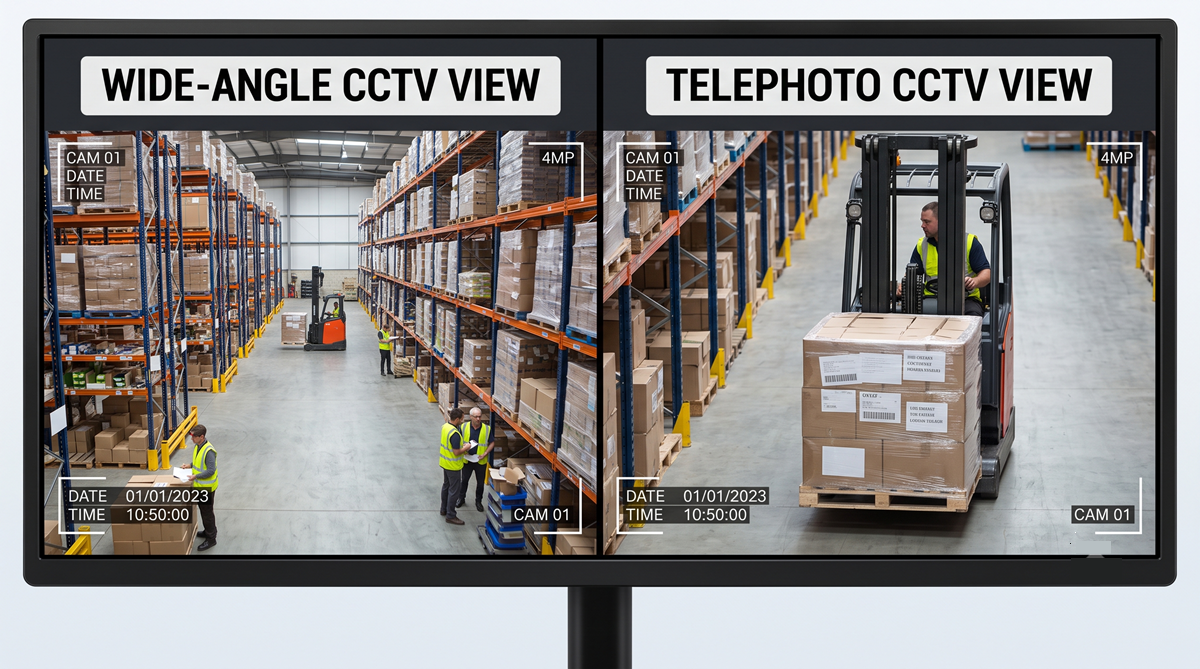
  • 2.8mm Lens (Wide Angle): Gives a massive ~100° field of view. Great for seeing an entire small room, but terrible for identifying faces past 15 feet. Everything looks far away.
  • 4.0mm Lens (Standard): A tighter ~80° view. The sweet spot for hallways, cash registers, and general commercial monitoring.
  • 12mm - 22mm Lens (Telephoto): A highly zoomed-in view. This is strictly required if you want to capture license plates or faces at gates and long distances.
  • More Megapixels ≠ Better Video: An 8MP (4K) camera on a cheap sensor will look worse at night than a high-quality 4MP camera. Low-light rating (Lux) matters more.
2.8mm vs 12mm Camera Lens View

The Privacy Trade-Off: Offshore Hardware

The internet is flooded with incredibly cheap, white-labeled security cameras from unvetted overseas manufacturers. While they might turn on and record video, you have absolutely no idea what their software is doing in the background.

Many of these mass-produced cameras possess hidden backdoors and route your video traffic through unencrypted foreign servers. Do not trade your corporate privacy for a cheap price tag. A compromised camera on your network is a direct gateway for hackers to access your sensitive IT infrastructure. Alphian exclusively deploys NDAA-compliant, enterprise-grade hardware that guarantees your data remains strictly yours.

Secure Encrypted Video Feed

Expert CCTV FAQs

Empowering you with the knowledge to make the right choice.

No, not anymore. In the past, viewing cameras remotely required a static IP and complicated "port forwarding," which created massive cybersecurity holes in your firewall. Today, we deploy secure P2P (Peer-to-Peer) cloud handshakes. You can securely view the cameras from your mobile app anywhere in the world on a standard dynamic internet connection.

A DVR (Digital Video Recorder) is older technology used for Analog cameras, relying on thick coaxial cables. An NVR (Network Video Recorder) is the modern standard used for IP (Internet Protocol) cameras. NVRs process higher resolution video, allow for AI analytics, and utilize PoE (Power over Ethernet) for much cleaner installations.

No. If you have an on-premise NVR (Network Video Recorder), the cameras communicate directly with the recorder over your local network. Even if your ISP (Rogers/Bell) goes completely offline, your cameras will continue recording perfectly to the local hard drive. You just won't be able to view them remotely on your phone until the internet is restored.

In Canada, audio recording is subject to strict privacy and wiretapping laws. You cannot record private conversations where there is a "reasonable expectation of privacy." Unless you are a party to the conversation, recording audio is highly risky legally. For this reason, we typically disable audio recording on commercial surveillance systems by default, focusing purely on high-definition video evidence.

Not if architected correctly. Your cameras send their heavy 4K video traffic directly to the local NVR on your internal network—they do not upload to the internet constantly. They only use internet bandwidth when you open the mobile app to view a live stream. If you opt for a 100% Cloud-based system, we can throttle the upload speeds to ensure it does not impact your daily IT operations.

People love the idea of a camera that spins, but PTZs have a massive flaw: if the camera is looking left, it is not recording what is happening on the right. For 90% of commercial applications, it is actually cheaper and far more secure to install two or three fixed cameras to cover all angles permanently, rather than one expensive PTZ that might be looking the wrong way during an incident.

Hollywood movies are shot at 24 FPS (Frames Per Second). Many people think they need 30 FPS for security cameras, but this is a waste of hard drive space. The industry standard for commercial surveillance is 15 FPS. This provides perfectly smooth video for identifying suspects without burning out your storage capacity prematurely.

This is called "IR Bounce" or "IR Bleed." If a camera is installed too close to a white wall or overhang, the camera's invisible Infrared (IR) night-vision light bounces off the wall directly back into the lens, blinding it. Another common cause is dust or spiderwebs on the dome cover catching the IR light. Proper placement and occasional physical cleaning immediately fix this.

1. "Are these cameras NDAA-compliant?" (Ensures you aren't buying compromised hardware).
2. "Are you using pure Cat6 Copper cable, or cheap CCA?" (CCA cable will burn out your PoE cameras).
3. "Are the cameras ONVIF compatible?" (Ensures you aren't locked into a proprietary system).
4. "Will you weatherproof the exterior fittings?" (Water ingress ruins more cameras than vandalism).

Upgrade Your Visibility.

Get a transparent quote for an intelligent, NDAA-compliant video surveillance system.

Request a Site Assessment