Protecting corporate data requires more than a software subscription. We engineer multi-layered security architectures that proactively identify vulnerabilities, block malicious behaviors, and ensure strict operational continuity.
The Reality of Modern Threats
For many years, installing basic antivirus software was considered sufficient protection. This software operated reactively—comparing files on a computer against a known list of virus signatures.
Today, cyber threats are heavily automated and polymorphic, meaning they constantly change their code to avoid detection. By the time a new threat is added to a legacy antivirus database, the breach has already occurred. True network defense requires shifting from reactive scanning to proactive behavioral analysis.
Our cybersecurity infrastructure operates under the assumption that threats will continuously attempt to breach the perimeter. We deploy systems that actively hunt for anomalies in network behavior, rather than waiting for a recognizable virus to execute.
Behavioral Analytics
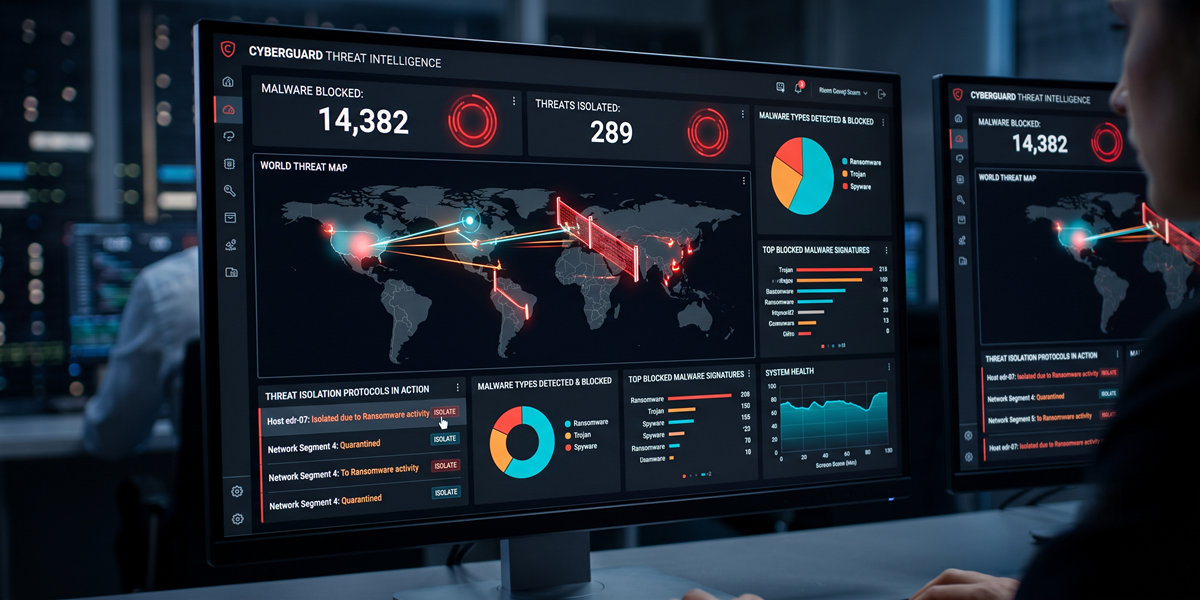
To counter sophisticated attacks like ransomware and zero-day exploits, we secure every computer and server (the endpoints) with AI-driven EDR technology.
EDR does not rely on virus names. It monitors what a program is doing. If an unknown file attempts to alter registries or rapidly encrypt documents, the EDR recognizes the malicious intent instantly.
Upon detecting anomalous behavior, the EDR automatically terminates the process and physically isolates the infected machine from the network, preventing lateral movement.
Every action is logged. If an incident occurs, our security team can trace the exact origin of the threat, understanding precisely how it entered and what data it attempted to access.
Identity Verification
Historically, corporate networks operated like a castle with a moat. Once you were inside the building, you were trusted and had access to everything. In the era of remote work and cloud computing, this perimeter-based model is highly vulnerable.
We engineer networks based on Zero Trust principles: "Never trust, always verify."
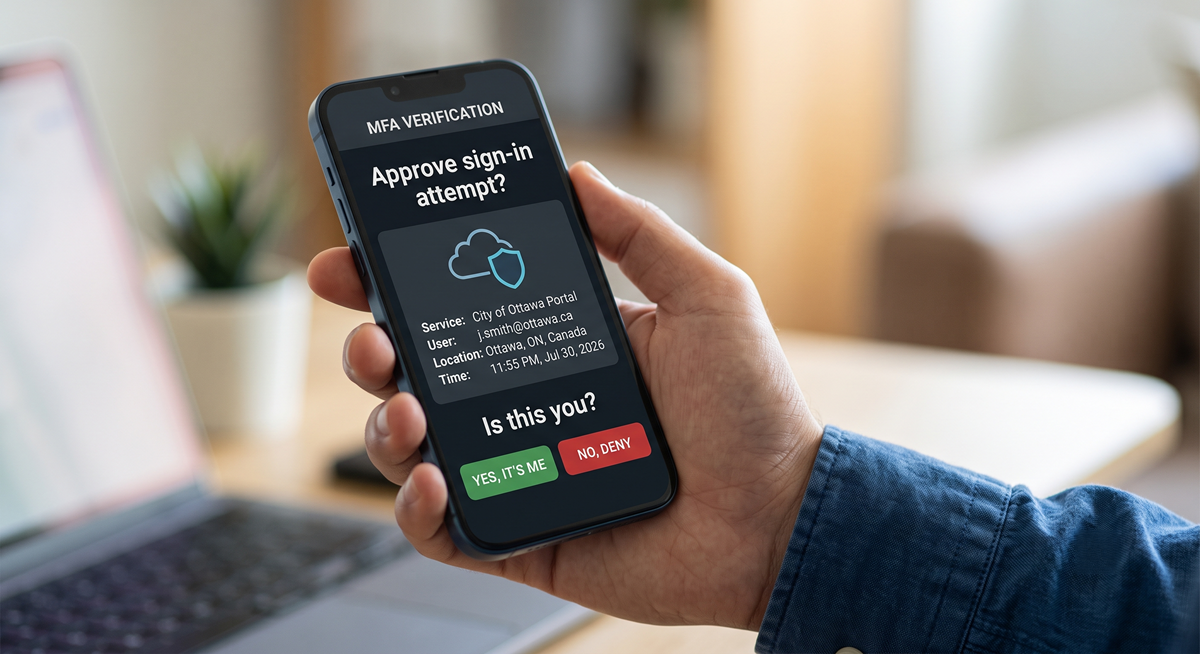
A compromised password is no longer sufficient to breach your environment. We enforce MFA across all critical applications, requiring secondary approval via a secure prompt.
We establish strict rules governing how data can be accessed, such as blocking login attempts from outside the country or preventing downloads on unmanaged home computers.
Staff are granted access solely to the specific data and applications required for their role, minimizing potential exposure if an individual account is compromised.
Proactive Culture
The most sophisticated technical defenses can be bypassed if an employee is manipulated into handing over their credentials. Phishing attacks have evolved to convincingly mimic internal executives, trusted vendors, and critical software providers.
We routinely deploy safe, simulated phishing emails to your staff. This safely identifies which employees are prone to clicking malicious links in a controlled environment.
Staff members who interact with a simulated threat are automatically enrolled in brief, engaging training modules to educate them on spotting subtle red flags.
Our goal is to transform your workforce from a potential liability into an active line of defense, fostering a culture of healthy skepticism and security awareness.
Technical Insights
Reach out to discuss a comprehensive vulnerability assessment and transition toward a zero-trust architecture.
Request a Security Audit