The Infrastructure Standard

Why Home Stereos Fail.

It is a common error to attempt to wire a commercial facility using standard residential 8-ohm stereo amplifiers. In a residential setting, each speaker requires a dedicated wire running directly back to the amplifier. If a dozen speakers are connected to a standard receiver, the electrical impedance drops to dangerous levels, inevitably causing the amplifier to overheat and fail.

Commercial environments require a completely different architecture known as a 70-Volt Distributed Audio System.

The 70V Advantage:

By utilizing step-down transformers at every speaker, a 70V amplifier allows integrators to "daisy-chain" dozens of speakers on a single, continuous wire run across massive warehouses or retail floors without signal degradation or hardware fatigue.

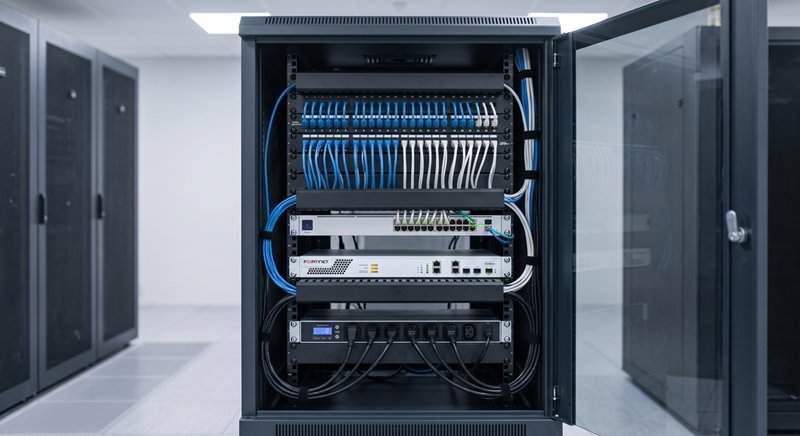
Commercial 70-Volt Audio Amplifier Rack
Intelligent Routing

Multi-Zone Control & Paging.

A unified facility requires dynamic acoustic control. Playing the same audio at the same volume across every square foot of a building is rarely optimal. The environment must be logically divided into distinct acoustic zones.

  • Zone Segregation: We program the matrix amplifiers to route soft, ambient background music to the reception lobby, while ensuring the executive corridors remain completely silent, and the manufacturing floor receives high-volume public address announcements.
  • VoIP SIP Paging Integration: Rather than relying on a standalone microphone at a front desk, the overhead paging system is integrated directly into the corporate IT network via SIP. Authorized staff can simply pick up any desk phone or mobile softphone, dial a specific extension, and broadcast a page directly to the warehouse zone.
  • Ambient Noise Compensation: In dynamic environments like restaurants or transit hubs, smart microphones monitor the ambient crowd volume and automatically raise or lower the background music in real-time to maintain the perfect acoustic balance.
Multi-Zone Commercial Pendant Speakers
Acoustic Privacy

Corporate Sound Masking.

Open-concept office designs are visually stunning but acoustically disastrous. With fewer walls and more hard surfaces (like glass and polished concrete), sound travels unimpeded. This results in severe distraction for employees and a complete loss of speech privacy for sensitive HR or financial discussions.

  • Raising the Sound Floor: Sound masking involves installing specialized upward-firing emitters above the drop ceiling. These emitters softly introduce a continuous, engineered background sound into the environment.
  • Pink Noise vs. White Noise: Unlike harsh "white noise" (which sounds like TV static), we utilize tuned "pink" or "brown" noise. This frequency perfectly matches human speech patterns, effectively rendering distant conversations muffled and unintelligible without being consciously noticed by the staff.
  • Compliance & Confidentiality: Sound masking is a critical infrastructure requirement for medical clinics (HIPAA/PIPEDA compliance), law firms, and financial institutions to ensure client conversations cannot be overheard in adjacent waiting rooms.
Corporate Sound Masking System

Commercial Audio FAQs

Objective answers regarding acoustic engineering and legal compliance.

Yes. Streaming music via a personal Spotify, Apple Music, or YouTube account in a commercial space violates copyright law. Businesses are legally required to pay public performance royalties (managed by organizations like SOCAN and Re:Sound in Canada). We provision commercial streaming platforms (such as Soundtrack Your Brand or SiriusXM for Business) that automatically include all required licenses in their monthly subscription.

In-Ceiling speakers sit flush inside traditional acoustic drop-ceilings for an invisible aesthetic. Pendant speakers hang suspended from cables; they are strictly required for open-architecture spaces (like modern offices with exposed ductwork) to bring the sound source down closer to the listener. Surface-Mount speakers are robust box units bolted directly to walls or beams, ideal for warehouses, patios, and industrial environments.

Distortion usually occurs when the amplifier is being pushed past its wattage limits, or if "clipping" is happening at the microphone source. Echo is a symptom of poor acoustic treatment in a room with too many hard surfaces. We deploy Digital Signal Processors (DSPs) to precisely equalize the audio, rolling off the harsh high and low frequencies that cause reverberation in large concrete spaces.

Yes, and in many jurisdictions, it is mandated by building codes. We wire the commercial amplifier directly into the facility's fire alarm control panel. If the fire alarm triggers, the amplifier instantly mutes all background music and non-emergency paging to ensure the evacuation sirens and strobe lights are clearly understood.

No. Active noise cancellation works by using a microphone to listen to a specific sound and then generating an exact inverse sound wave to "cancel" it out before it reaches the ear. This requires being sealed in a headset. Sound Masking adds a gentle, uniform layer of ambient background sound into the entire room, which mathematically reduces the distance at which human speech is intelligible.

Optimize the Acoustic Environment.

Reach out to discuss engineering a high-fidelity distributed audio or speech privacy system for the facility.

Request an AV Consultation