The Technological Shift

Retiring the Analog Buzzer.

Legacy analog intercoms rely on complex, multi-pair copper wiring routed through the walls to physical receiver handsets in every office or apartment. When the copper wiring degrades, the audio becomes distorted, and repairing the system requires invasive drywall work.

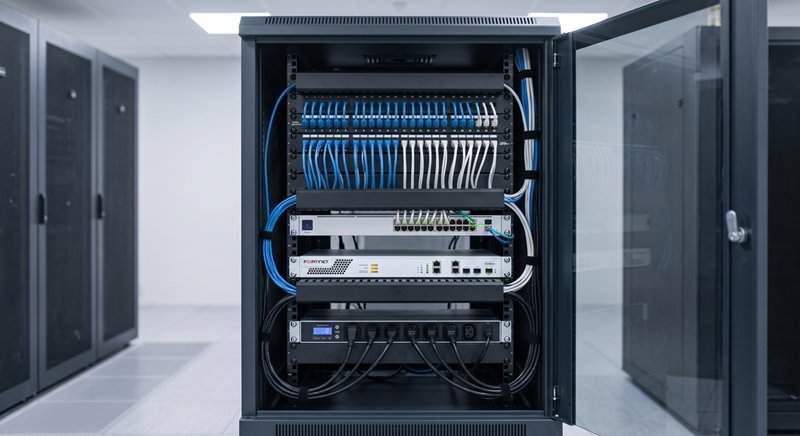
We transition facilities to IP (Internet Protocol) Video Intercoms. These modern units utilize a single Cat6 network cable (PoE) to connect directly to the corporate IT infrastructure, providing pristine two-way audio and high-definition video without the need for massive analog wire bundles.

Unified Communication:

Because IP intercoms sit on the data network, they can integrate natively with existing VoIP phone systems, allowing a visitor at the front gate to ring a standard desk phone directly.

Modern IP Video Intercom Station
Property Management

Cloud Routing & Mobility.

For property managers operating multi-tenant commercial offices or residential high-rises, installing a dedicated video receiver screen in every single suite is a massive, unnecessary capital expense.

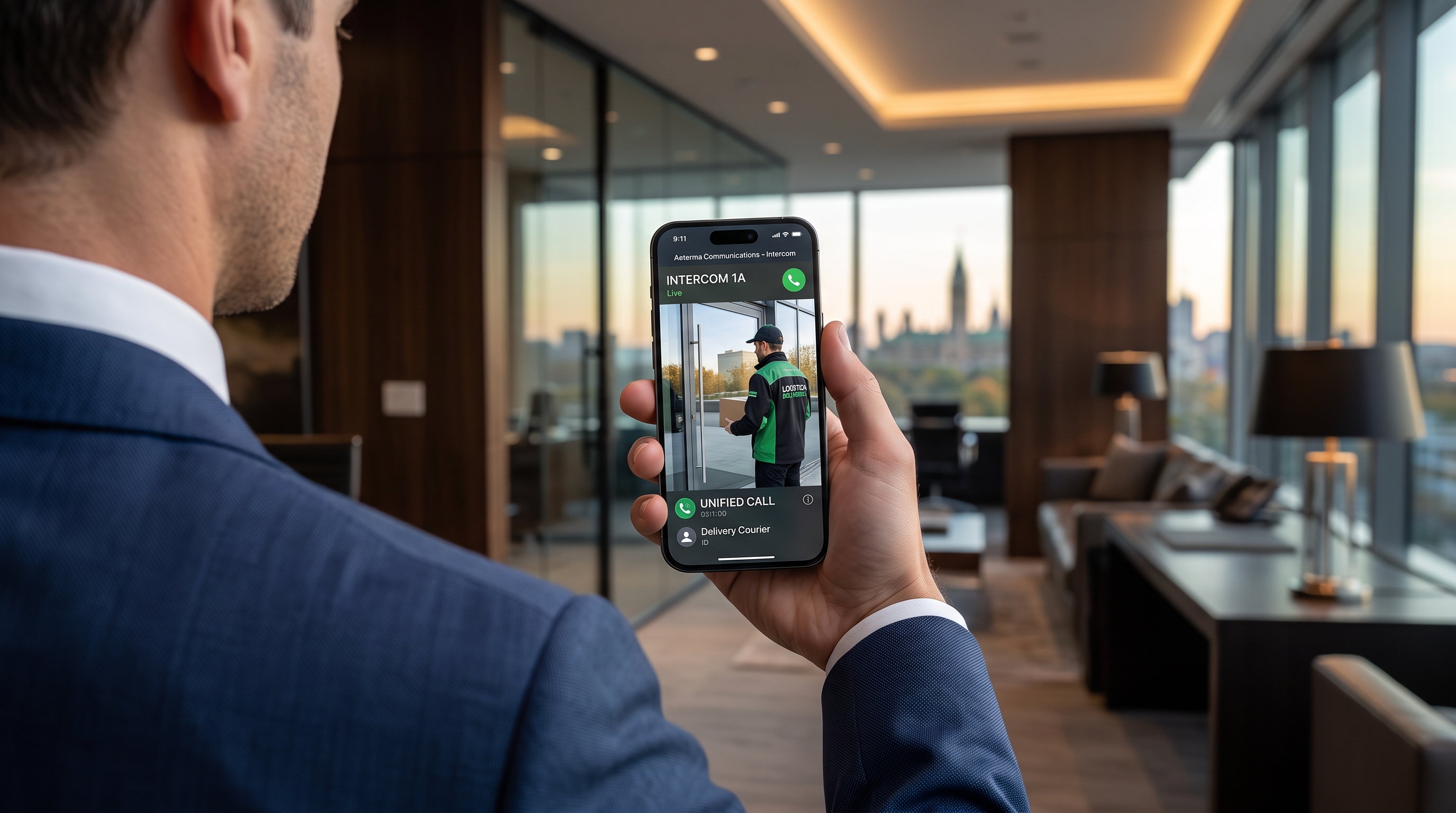
  • Direct-to-Mobile Calling: We engineer the front door station to route visitor calls through the cloud directly to a tenant's smartphone via an encrypted application.
  • Remote Verification: Tenants receive a secure video call on their mobile device, allowing them to visually identify a delivery driver or guest, communicate clearly, and trigger the door release button from the app—whether they are sitting in the office or traveling overseas.
  • Instant Directory Updates: Property management teams can update the digital directory screen at the front door instantly from a web browser when a tenant moves in or out, eliminating the need to physically replace printed name tags.
Mobile Video Intercom Call Interface
Hardware Integrity

Engineered for the Elements.

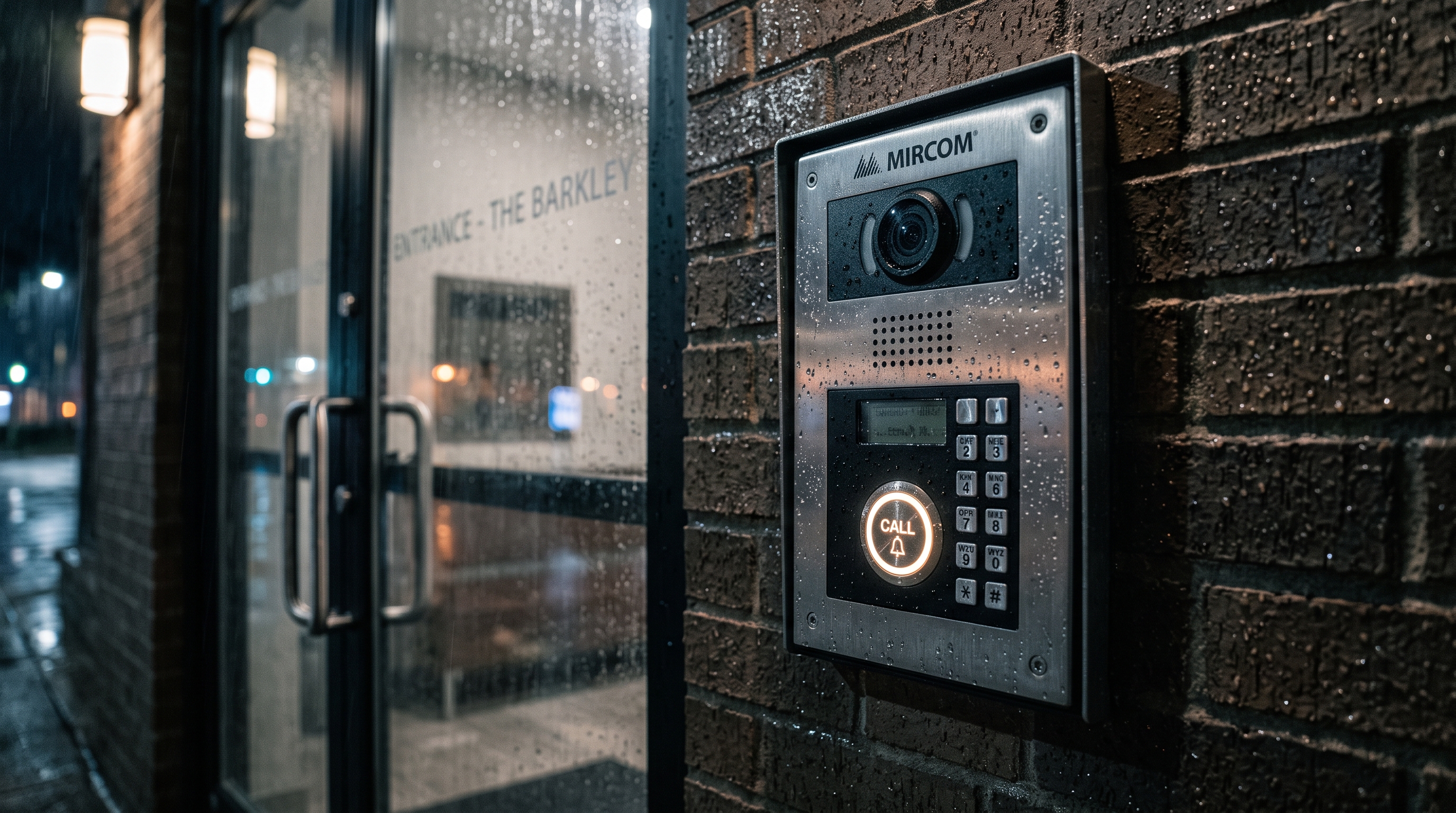
Exterior intercom stations are exposed to harsh environmental factors and potential vandalism. The hardware deployed must be capable of surviving severe weather while maintaining pristine optical clarity for security verification.

  • WDR Video Sensors: Intercom cameras often face direct sunlight behind the visitor. We utilize True WDR (Wide Dynamic Range) sensors that instantly balance the lighting, ensuring the visitor's face is clearly visible rather than appearing as a dark silhouette.
  • Vandal-Proof Housings: Exterior stations are specified with IK08 or IK10 impact ratings, constructed from heavy-duty cast aluminum and tempered glass to resist blunt-force strikes and tampering.
  • Weather Sealing: Featuring IP65 to IP67 environmental ratings, the internal electronics are sealed against driving rain, dust ingress, and freezing temperatures common in Canadian winters.
Rugged Weatherproof Commercial Intercom
Ecosystem Unification

Access Control Synchronization.

A commercial intercom should not operate as an isolated device. To maximize infrastructure efficiency, the intercom unit must integrate seamlessly with the broader building security platform.

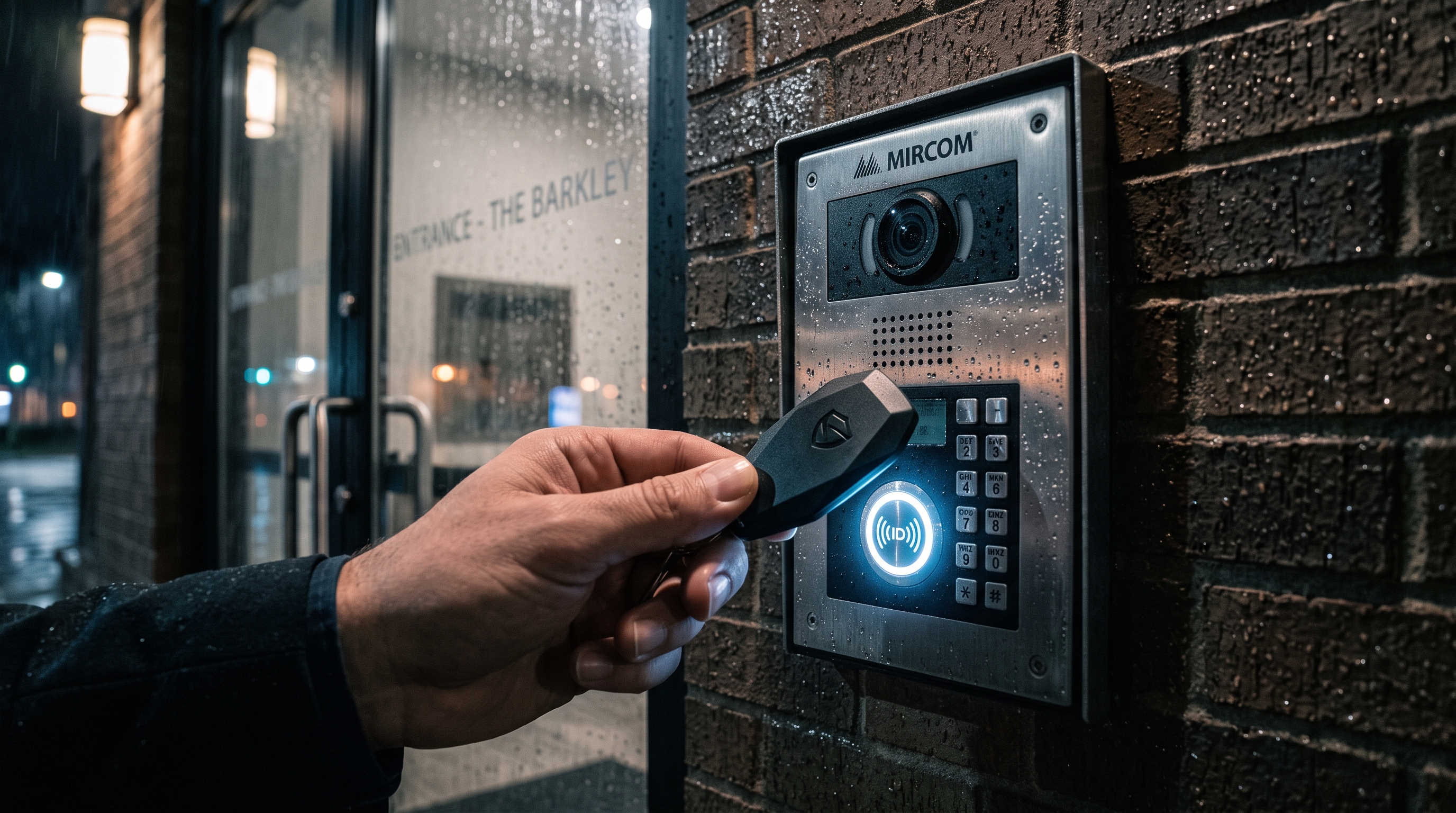
  • Built-in RFID Readers: Many enterprise intercoms feature integrated card readers. This allows staff members to swipe their secure key fob directly on the intercom faceplate to enter, eliminating the need to mount a secondary, separate card reader on the wall.
  • VMS Recording: The wide-angle camera built into the intercom can be integrated via ONVIF to the facility's main Video Management System (VMS) or NVR, ensuring it continuously records footage just like any other security camera on the perimeter.
Intercom with Integrated Access Control Reader

Commercial Intercom FAQs

Objective answers regarding visitor management and VoIP integrations.

Yes. The intercom contains internal dry-contact relays. When a receptionist or tenant presses the "Unlock" button on their phone or app, the intercom triggers this relay, sending a precise electrical signal to the gate motor, maglock, or automatic door operator to initiate the opening sequence.

SIP (Session Initiation Protocol) is the universal language used for Voice over IP (VoIP) communications. By specifying SIP-compliant intercoms, the device can act exactly like a standard digital extension on a corporate phone system (like Cisco or RingCentral). This allows the intercom to call desk phones directly, rather than relying on a proprietary, closed-loop receiver system.

In most cases, we strongly recommend pulling a new Cat6 data cable to ensure flawless video transmission and PoE power. However, if structural limitations make new cabling impossible, we can often deploy specialized "2-Wire to IP" converters. These devices inject high-speed data over the existing legacy copper wires, allowing an IP intercom upgrade without tearing open walls.

If the main facility internet goes completely offline, cloud-based intercoms will temporarily lose the ability to push video calls to mobile smartphones, as the cloud handshake requires internet. The intercom can be configured to failover to standard cellular phone calls (audio only) as a backup, provided an LTE backup communicator or SIP trunk failure route is established.

Yes. For intercoms featuring a numeric keypad, administrators can generate temporary PIN codes directly from the cloud management portal. These codes can be restricted by time (e.g., active only between 9 AM and 11 AM) and are automatically deleted after use, providing secure access for couriers or temporary contractors without compromising long-term facility security.

Modernize Visitor Management.

Reach out to discuss replacing legacy buzzers with an integrated, mobile-ready IP video intercom infrastructure.

Request a Security Audit