A reliable network requires careful planning and proper physical infrastructure. We design scalable data environments that prioritize uptime, security, and consistent bandwidth for daily operations.
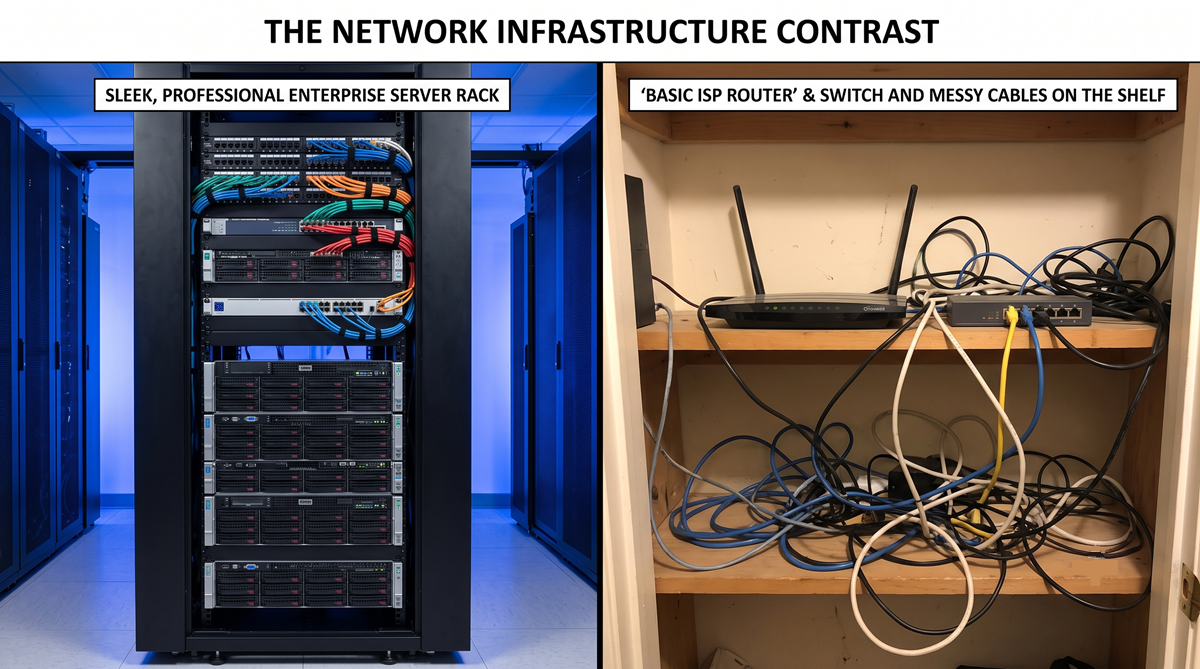
When purchasing a commercial internet package, ISPs typically provide a basic modem/router combination unit. While functional for light use, these devices are rarely equipped with the processing power required to manage a busy commercial environment.
Forcing a basic router to concurrently handle dozens of employees, VoIP phone traffic, guest Wi-Fi, and high-definition security cameras often leads to processor exhaustion. This manifests as unexplained network crashes, dropped calls, and sluggish speeds, regardless of the bandwidth purchased from the ISP.
Infrastructure Separation:
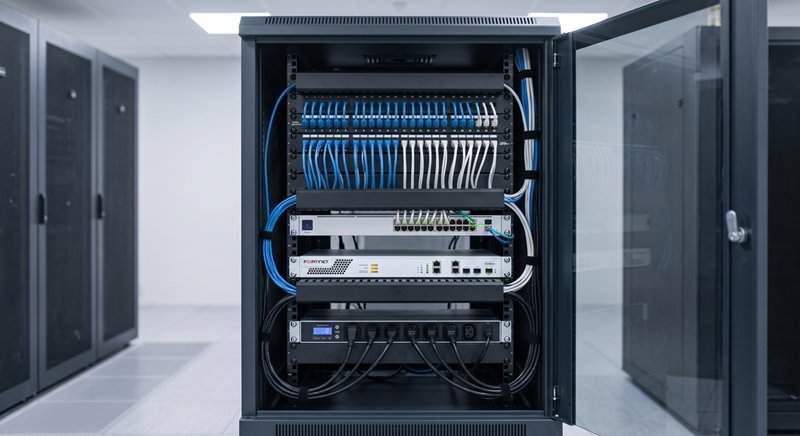
Best practices dictate bridging the ISP modem (disabling its routing functions) and placing a dedicated, enterprise-grade firewall and core switch behind it to handle the traffic load efficiently.
A well-architected network separates routing, security, and internal switching across dedicated hardware to ensure absolute stability under heavy load.
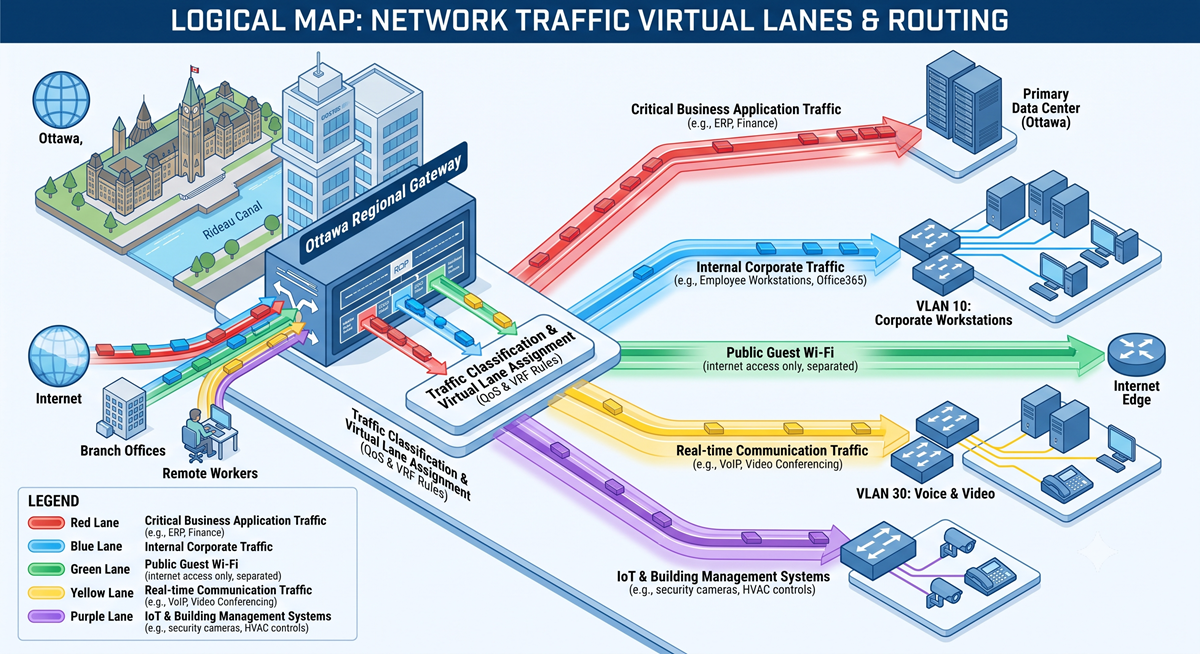
On a standard "flat" network, any connected device can theoretically communicate with any other device. This means a compromised mobile phone on the guest Wi-Fi could potentially reach an HR server or a security camera interface.
To mitigate this, commercial environments utilize VLANs (Virtual Local Area Networks). We logically slice the physical network into isolated, secure lanes. Guest Wi-Fi, Security Cameras, and Corporate Data are placed on completely separate VLANs. If a device on the guest network is infected with malware, the logical separation prevents it from spreading to corporate hardware.
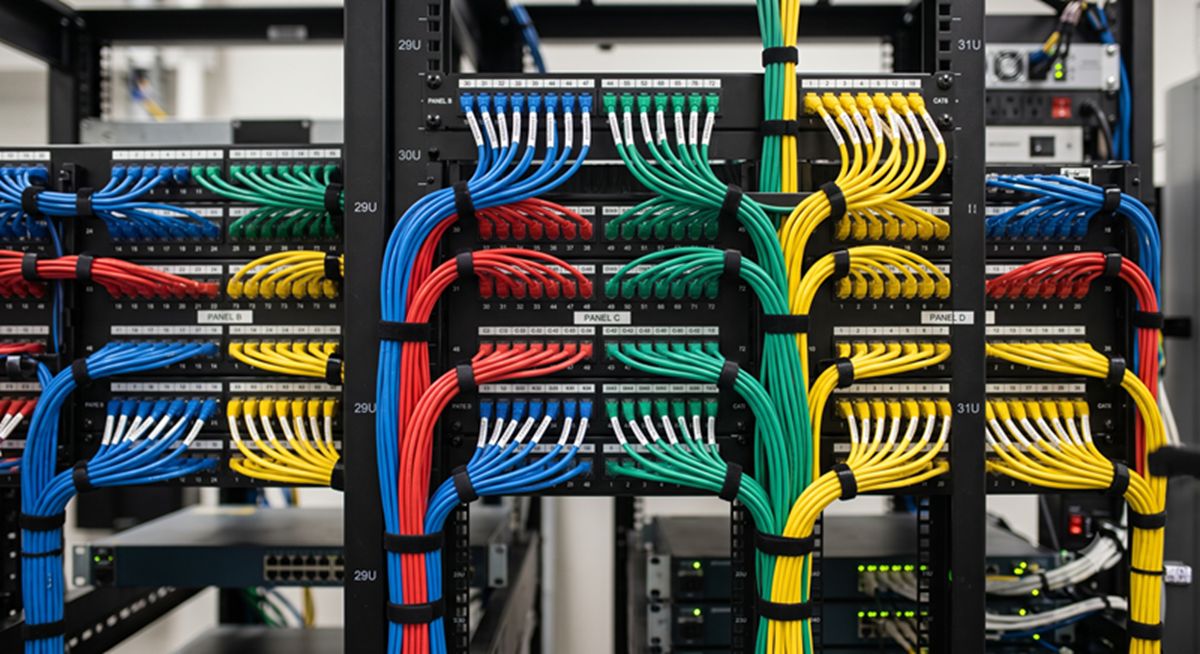
The physical cables hidden in the walls dictate the ultimate speed of the network. Proper structured cabling adheres to strict industry standards to prevent data loss and simplify maintenance.
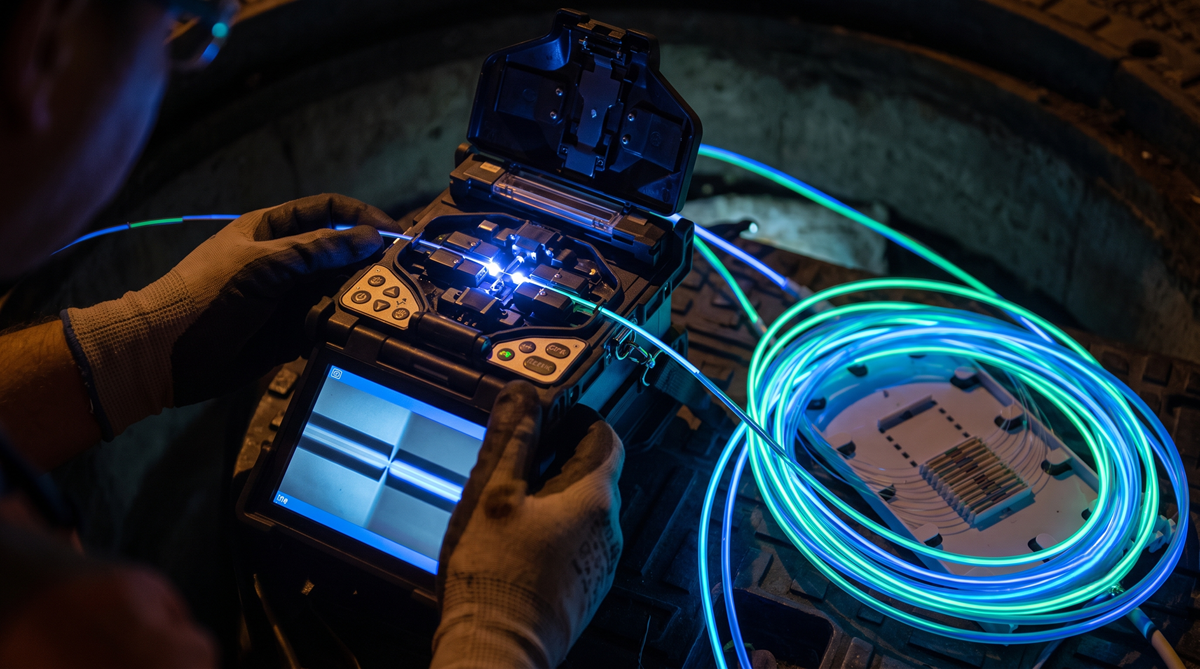
Standard copper cabling is limited to 100 meters (328 feet). For data transmission beyond this limit, or for high-capacity backbone connections between server rooms, fiber optic cabling is required. Fiber transmits data using light, rendering it entirely immune to electrical interference.
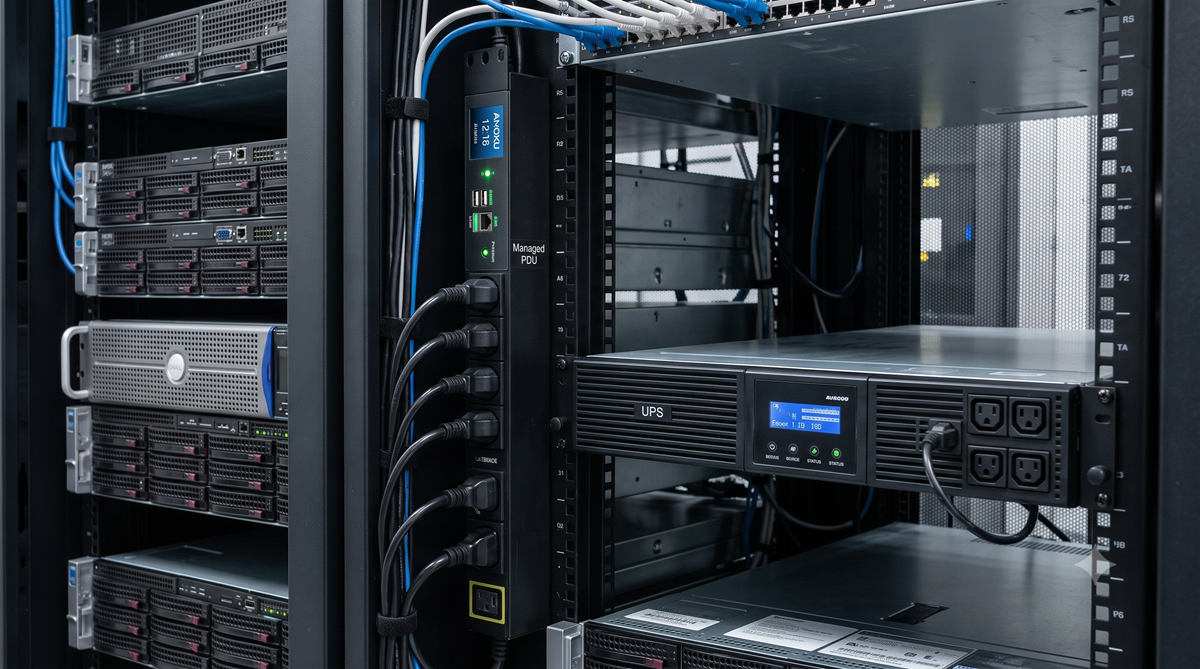
Network reliability extends beyond data cables; it requires clean, manageable power distribution. When a modem or switch becomes unresponsive, a physical reboot is often necessary.
Rather than sending a technician on-site or asking staff to locate the server room to unplug a device, commercial racks utilize Managed Power Distribution Units (PDUs). These intelligent power strips connect to the network, allowing IT administrators to securely log in remotely and toggle the power to specific individual outlets. This enables instant remote reboots, minimizing downtime and support costs.
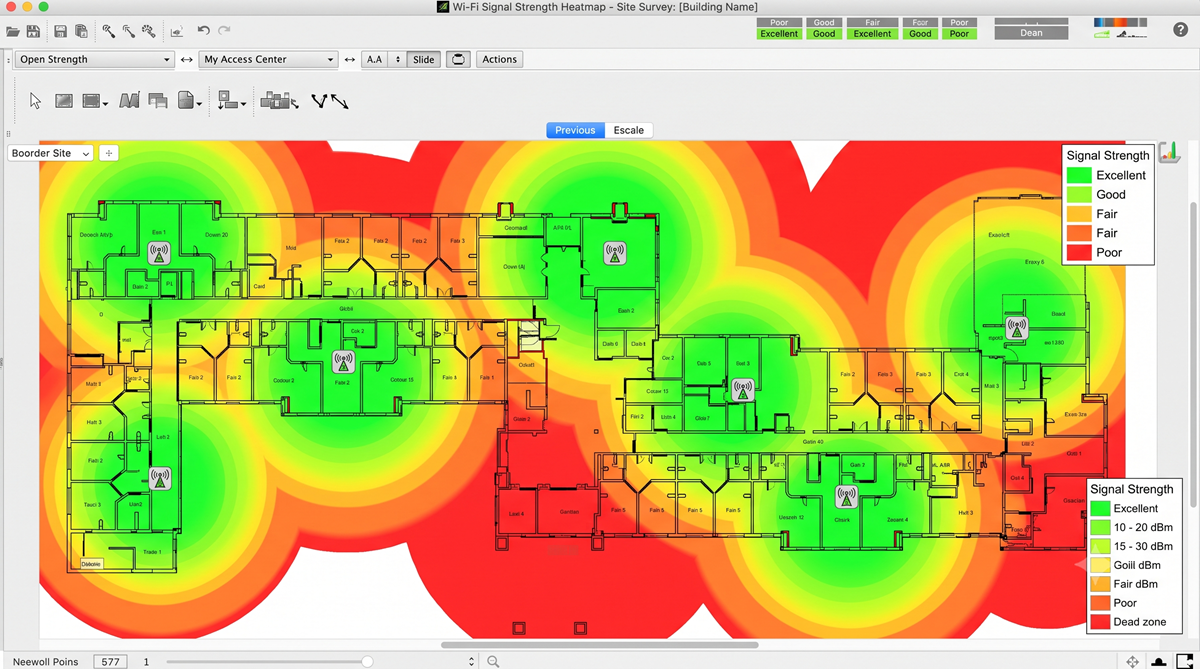
Deploying wireless access points without an underlying strategy frequently results in overlapping channel interference and coverage gaps. We approach wireless networks analytically to ensure consistent performance.
Objective answers to frequently encountered IT questions.
Reach out to discuss a comprehensive audit of your physical cabling, network hardware, and wireless coverage.
Request a Network Audit